Sustainability / MAGNUM INSIGHTS · 4 MIN READ
Material Selection: Balancing Aesthetics, Performance and Cost
Choosing a finish means understanding what it does in place, how it is installed and what it asks of the operator later.
Set criteria before samples
Colour and texture can lead the conversation, but use, exposure, expected maintenance and budget establish whether a material belongs in the project. Different rooms may require different answers even when a consistent visual language is desired.
An evaluation matrix can record desired appearance, technical requirements, available supply and questions still open. It makes trade-offs visible rather than disguising them as a purely aesthetic preference.
Assess the assembly
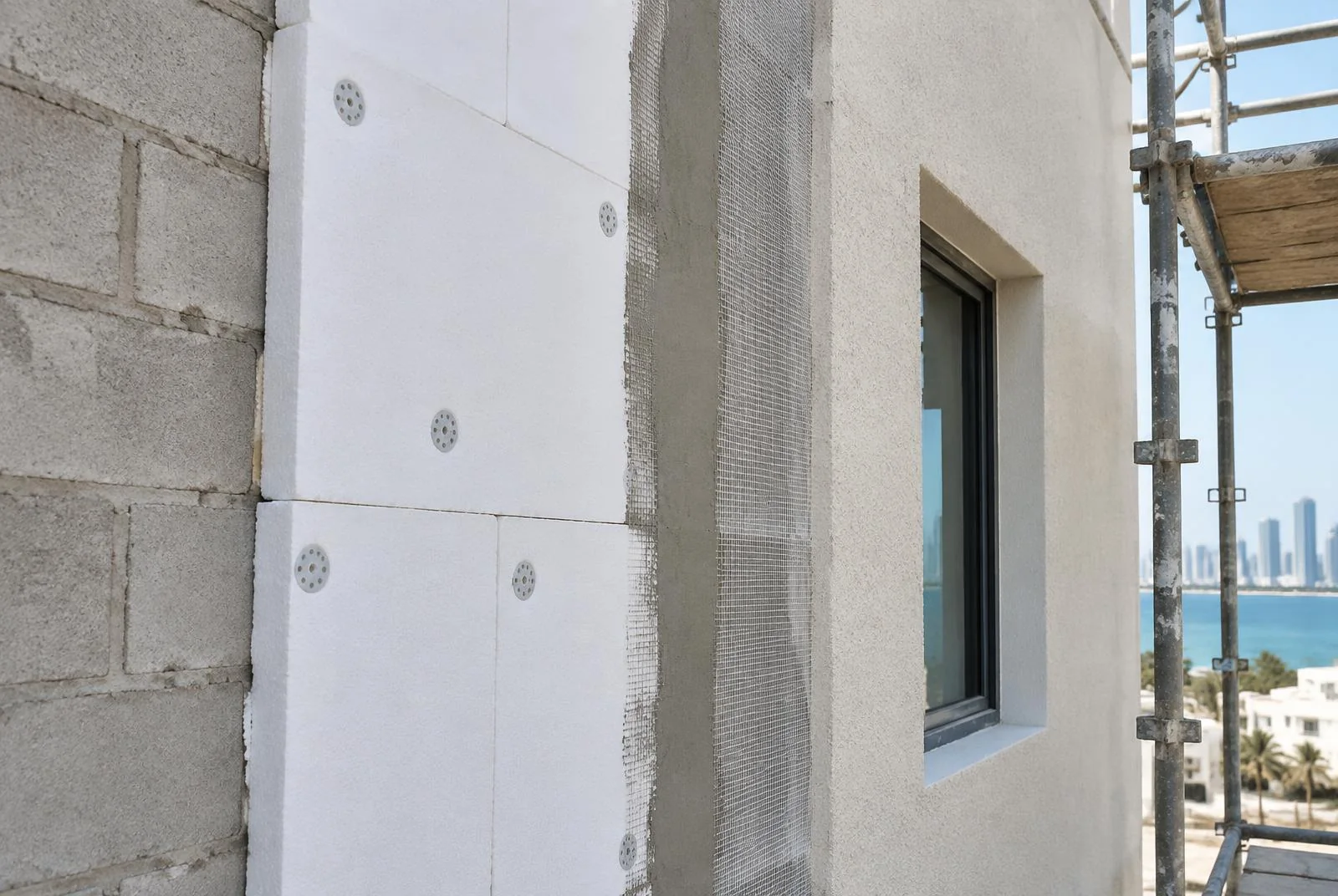
A finish depends on substrate, fixing, joint treatment and adjacent materials. Replacing one product with another that looks similar may alter thickness, movement, cleaning requirements or installation sequence. The whole assembly should be reviewed before substitution.
Performance and compliance data must relate to the exact proposed product and application. A generic claim about a material family cannot substitute for project-specific review.
Consider cost over use
Purchase price is only one part of a material decision. Installation complexity, protection during construction, cleaning, repair and replacement can alter the real cost of ownership. A seemingly economical finish may be expensive to maintain in a heavily used area.
Cost comparisons need current quotations and a defined scope; they should not be inferred from an image or broad category. Record why the selected option fits the brief, not merely that it was cheaper.
Approve and document
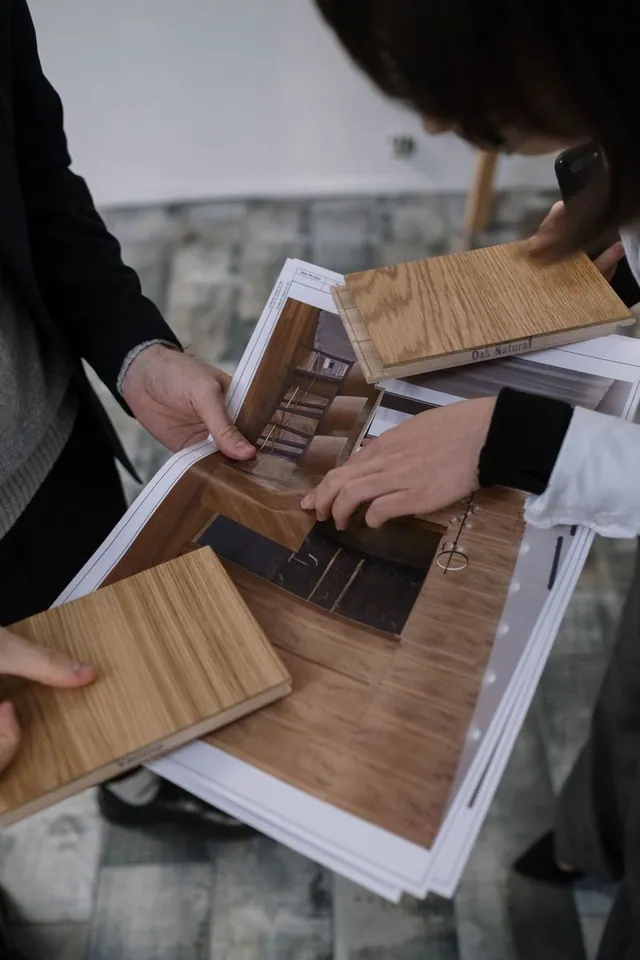
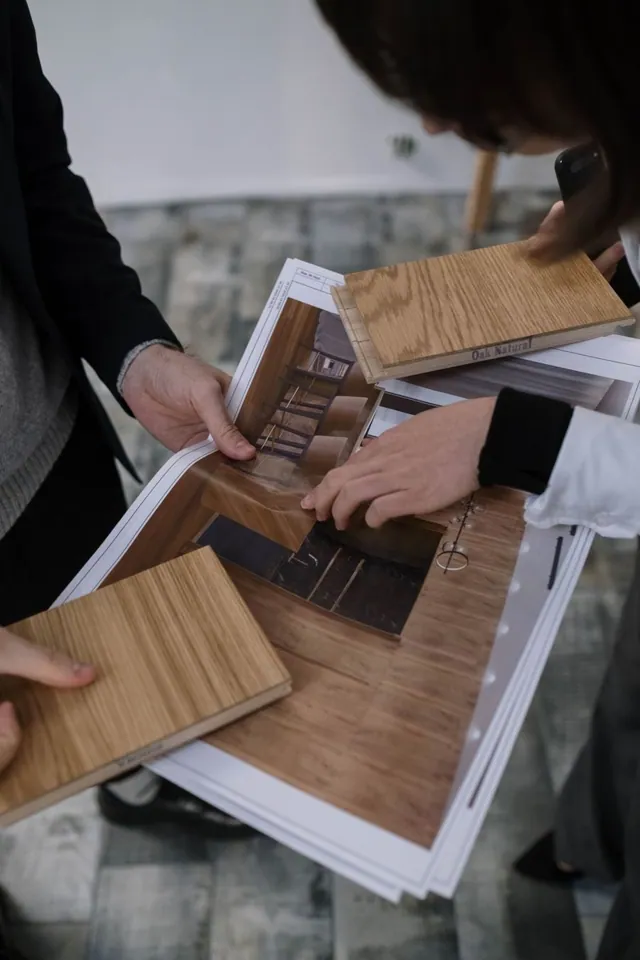
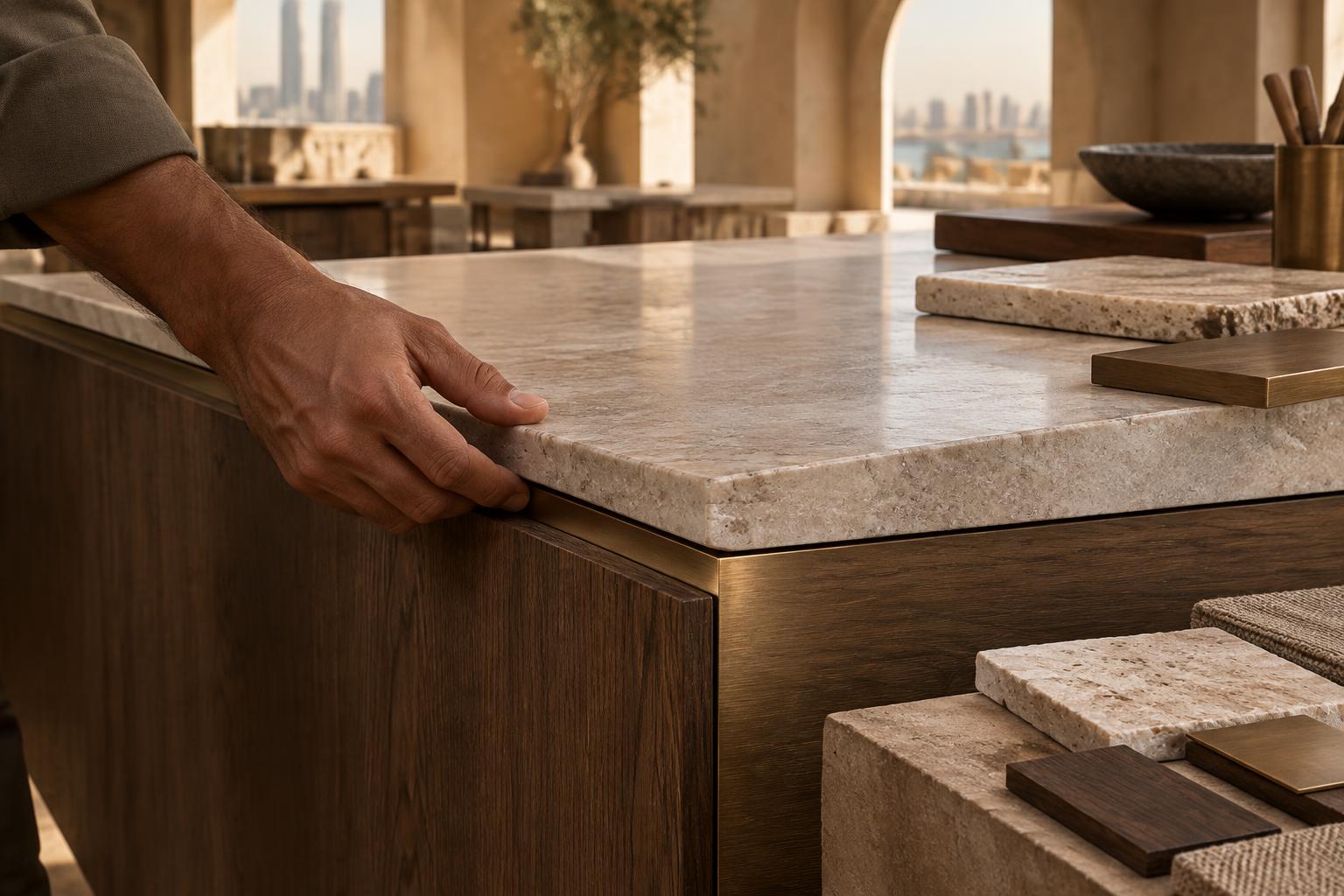
A sample viewed under project lighting can expose shifts in colour or texture that a digital image hides. Mock-ups are useful at junctions and high-visibility areas, while records of approvals help installation teams maintain consistency.
The handover record should identify actual installed products and care instructions. Responsible material selection continues beyond the moment the surface looks finished.
KEY TAKEAWAYS
- 01
Review the assembly, not a sample in isolation.
- 02
Balance procurement price with installation and upkeep.