Energy & Industrial / MAGNUM INSIGHTS · 4 MIN READ
Understanding Upstream, Midstream & Downstream in the Energy Sector
The energy value chain uses three distinct terms for different activities. Understanding where production ends, transport begins and processing takes place helps frame the right engineering and industrial-support questions.
Three stages, different questions
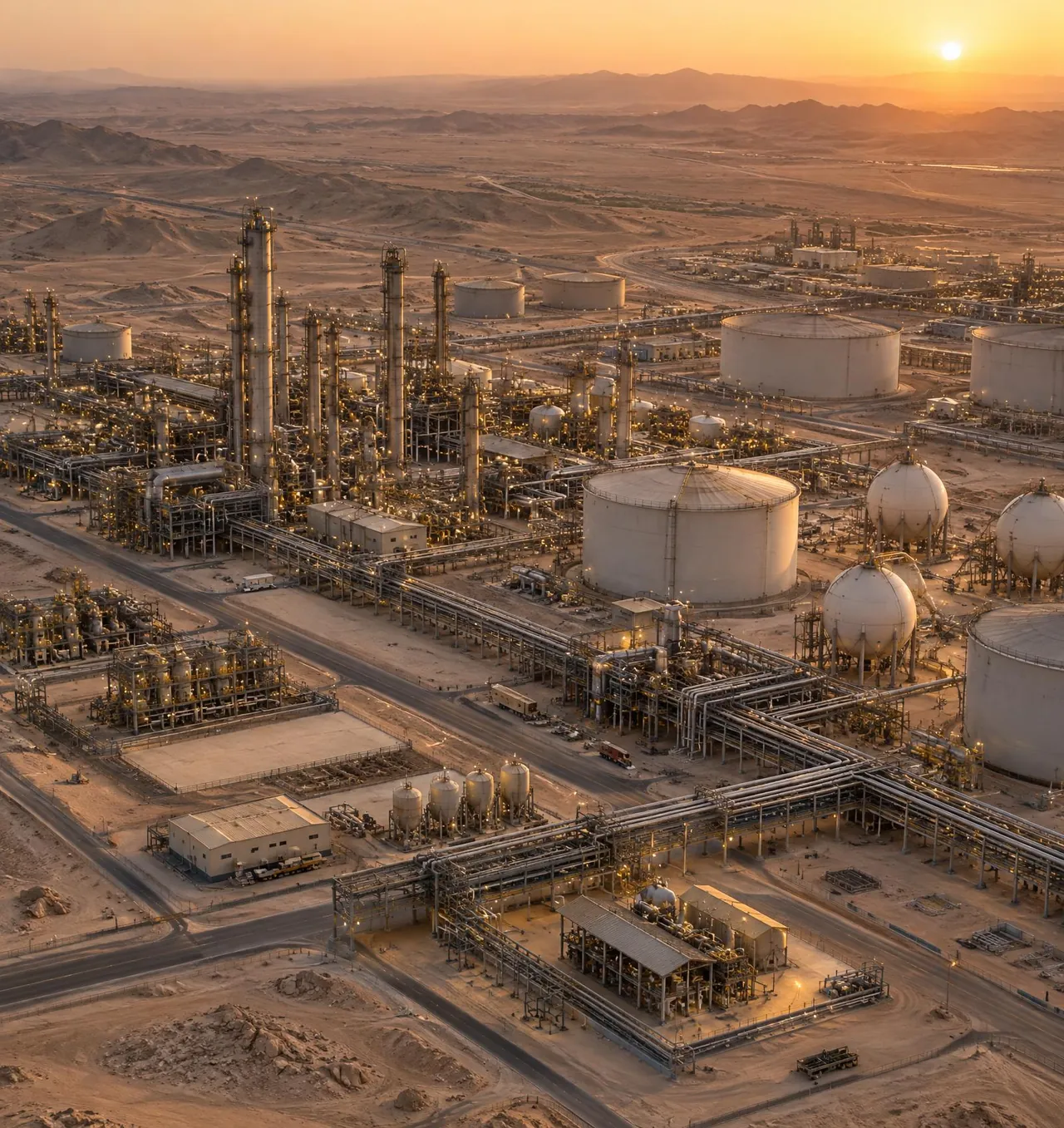
Upstream covers exploration and the production or extraction of oil and gas. Midstream covers the transportation and storage of produced resources, including pipelines, terminals, tanks and logistics. Downstream covers refining or processing feedstocks and the distribution and marketing of finished products. A facility can contain activities at the boundary between stages; the terms describe functions rather than neatly separated companies or locations.
This distinction matters when discussing design scope. A well pad, a pipeline route and a processing plant face different operating conditions, regulatory requirements and specialist disciplines. General descriptions should never be read as evidence that a particular firm has performed every specialist service.
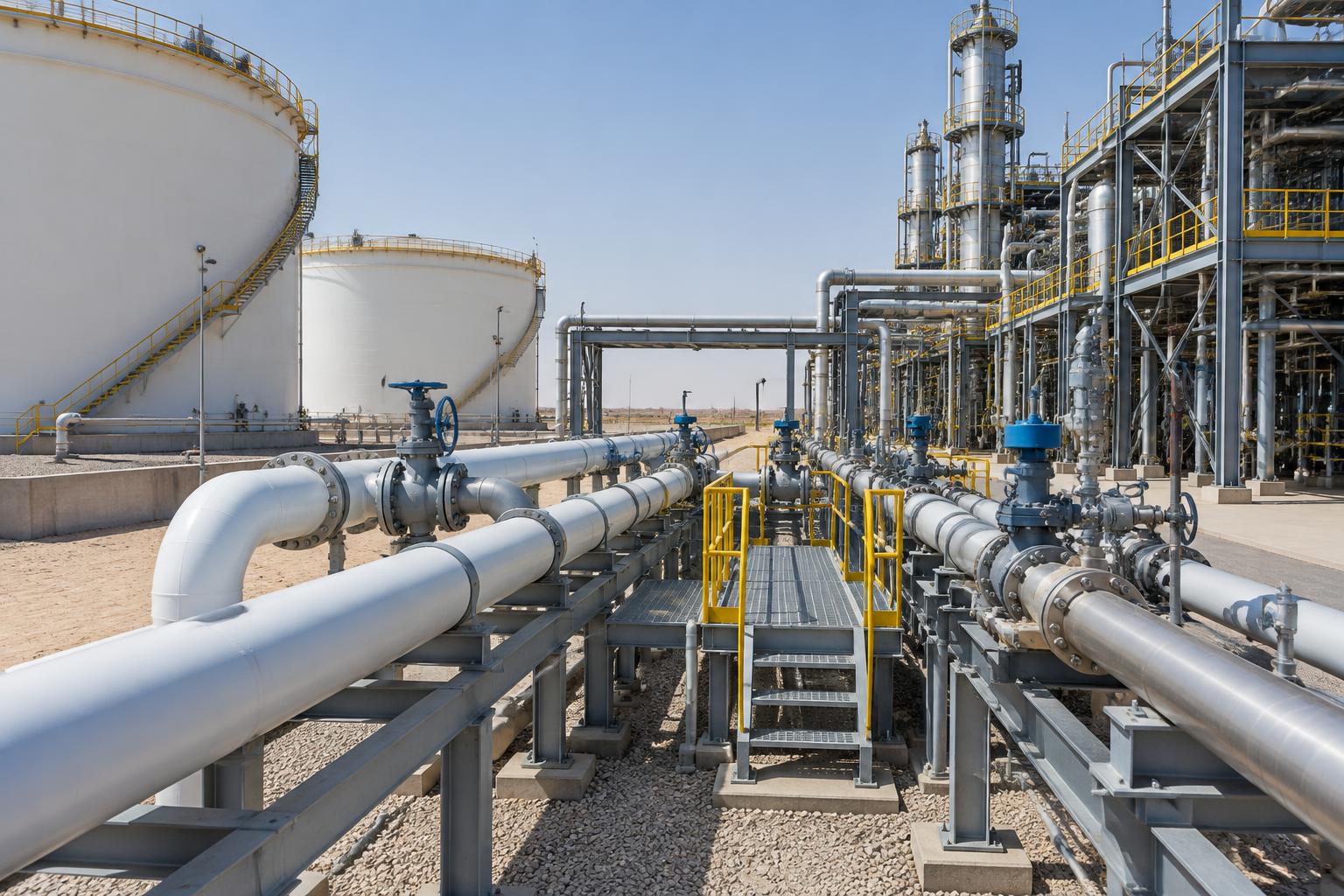
Descriptions of the value chain simplify a network of specialist operations. Gas processing and export infrastructure can sit at different points depending on their function and the terminology used by an operator. When scope matters, identify the actual facility and activity rather than relying on a label alone.
Upstream: working at the source
Exploration establishes whether resources may be present; appraisal and development inform how production might be organised. Drilling, extraction and initial handling take place in operating environments that may be remote or constrained. At a high level, industrial-support considerations include ground conditions, access roads, power and water provision, equipment layout, maintenance access and safe segregation of people and processes.
These considerations are context, not a universal design recipe. The scope and technical controls depend on the operator, specialist engineers, hazard assessment, governing requirements and the characteristics of the field.
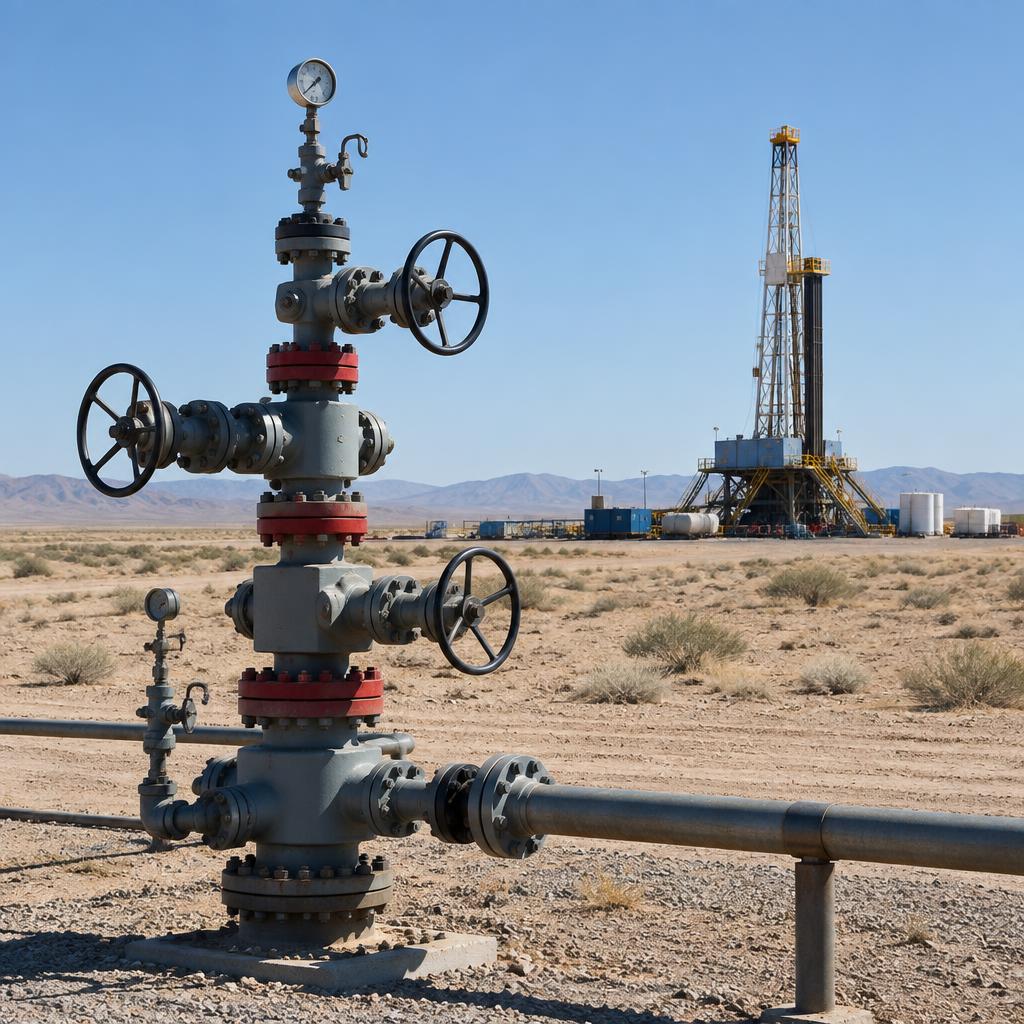
An upstream site may need phased development and maintenance access as operations evolve. Layout decisions should preserve safe movement and the ability to inspect equipment; these questions are assessed under the operator’s technical and safety framework.
Midstream: moving and holding resources
Midstream infrastructure links sources to processing or markets. Pipelines require attention to route selection, crossings, access and maintenance; storage terminals raise questions about tank layouts, containment, transfer points and operational circulation. Transport by road, rail or vessel introduces different interfaces and approvals depending on location and product.
An apparently simple corridor can cross utilities, land boundaries and sensitive conditions. Coordination therefore spans civil works, structural supports, communications, safety provisions and the facility’s operating procedures. Applicable technical rules must be established for the actual installation, not assumed from an illustrative image.
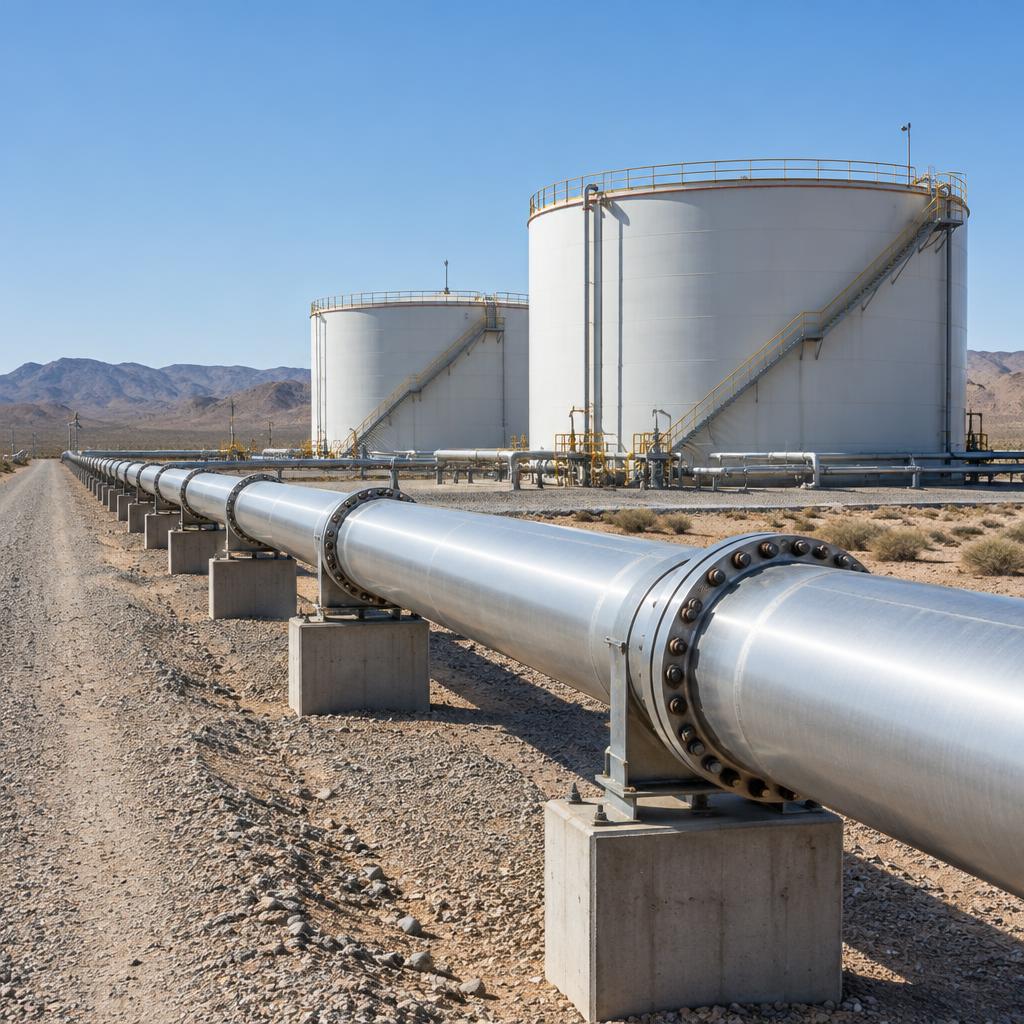
For transport assets, operating continuity is central. Access for inspection, isolation and repair affects corridors and facilities. Boundaries with roads and existing utilities require coordinated reviews by the relevant authorities and specialist disciplines.
Downstream: processing and products
Downstream activities transform feedstocks through refining or other processing, then move finished products into distribution and marketing channels. Plants can bring process equipment, utilities, storage, loading systems and maintenance routes into dense proximity. Even an auxiliary building must be coordinated with the requirements of the larger operating site.
Design discussions may involve access, structural loads, ventilation, service separation and staged construction around ongoing operations. Specialist process design and safety decisions belong to qualified teams working under the applicable project requirements; architectural or general industrial support should not be confused with those roles.
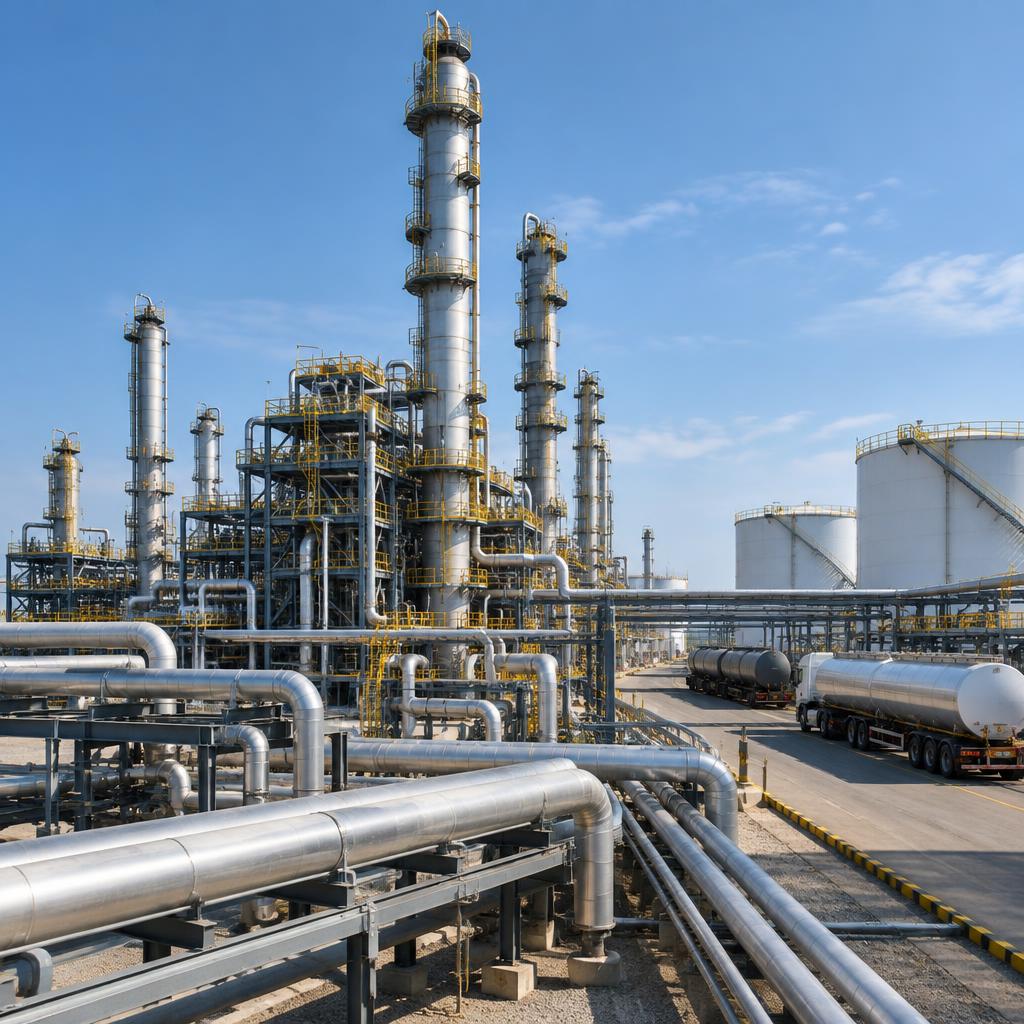
Processing facilities often include utilities and support buildings that must be integrated with plant operation. Their architectural and engineering requirements cannot be separated from access control, maintenance cycles and the site’s approved hazard and safety framework.
An integrated view of the chain
The three stages are connected by physical and information interfaces. Product specification, transport capacity, storage strategy and facility access influence one another. A change at one stage can affect the assumptions used in another, so clear boundaries of responsibility and reliable technical information matter more than an oversimplified diagram.
This article is an educational overview, not a description of MAGNUM project experience in drilling, pipelines or refining. Any future case study should identify verified scope and evidence before connecting work to a specific stage.
Clear terminology helps procurement, planning and design teams discuss the right interfaces without implying a capability claim. A responsible project description names the actual work performed and its limits, rather than adopting the scope of an entire sector.
KEY TAKEAWAYS
- 01
Upstream is exploration and extraction; midstream is transport and storage; downstream is processing and finished-product distribution.
- 02
Each stage presents distinct interfaces and requires its own qualified technical review.
- 03
Illustrative industrial imagery is not evidence of MAGNUM project scope.